Buying Guides
How to Match an Amplifier to Your Speakers
An amplifier and a speaker are a team. If they do not match, the sound suffers — or something breaks. Matching them is not hard, once you know the three numbers that matter: power, impedance, and channels.
1. Match the power
Every speaker has an RMS power rating — the power it can handle all day. Your amplifier should give about the same power per channel as the speaker's RMS rating.
- Too little power is the most common mistake. When the amplifier is too weak, you turn it up, it distorts, and that distortion is what damages speakers — not the lack of power itself.
- Too much power is also a risk. A very strong amplifier can push the speaker past its limit if someone turns the volume up too far.
- A little headroom is good. An amplifier that gives a bit more than the speaker's RMS rating, used with care, sounds clean and relaxed. A processor or limiter can protect the speaker from accidents.
If you do not know your speaker's RMS power, look at the label on the back of the speaker, or send us the model number and we will check it for you.
2. Match the impedance
Impedance is measured in ohms. Most professional speakers are 8 ohms. Some are 4 ohms or 16 ohms.
Your amplifier must support the impedance of the speakers you connect. When you connect two 8-ohm speakers to one channel, the amplifier sees 4 ohms — and it must be rated for 4 ohms. If it is not, it will overheat or shut down. Always check the amplifier's rating at the impedance you will actually use.
3. Choose the right number of channels
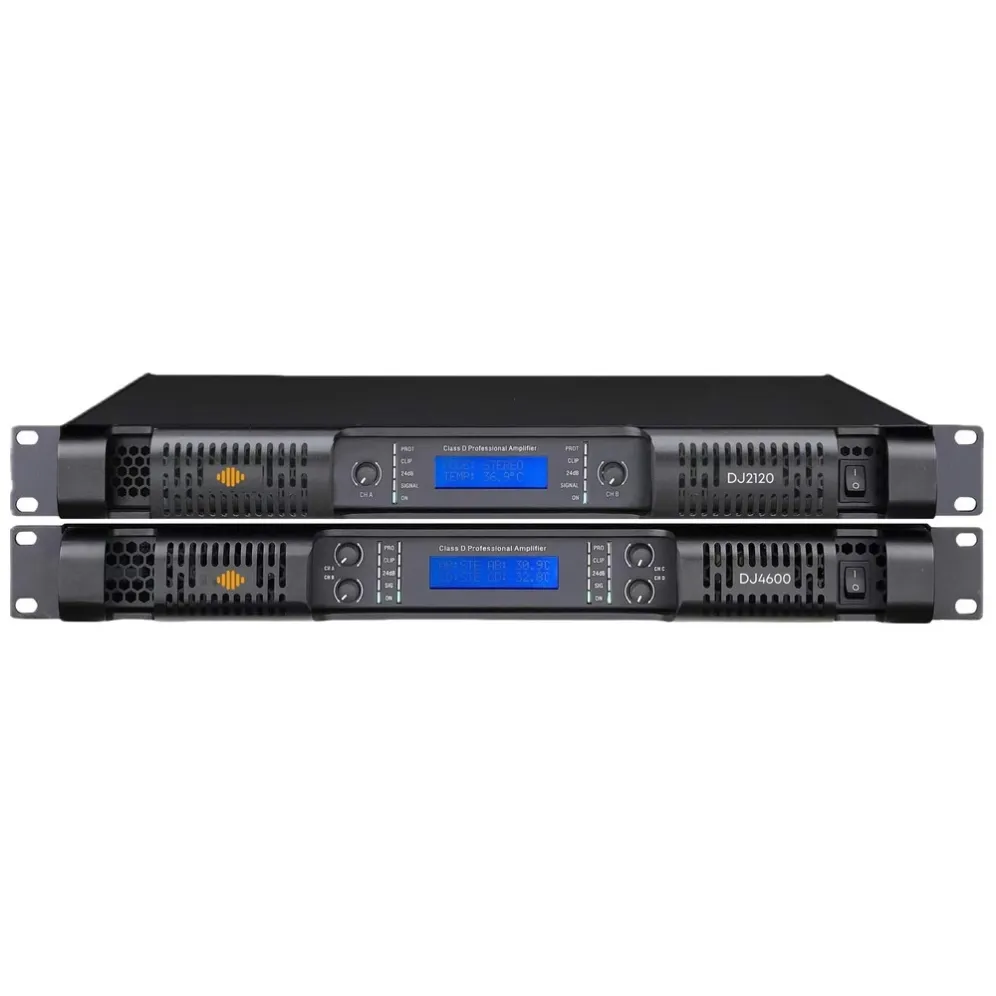
- 2-channel amplifiers drive two speakers, or two groups of speakers. Simple and common for small systems.
- 4-channel amplifiers drive four speakers, or two speakers plus two subwoofers, from one box. They save space in the rack and save money on cables. For a system with main speakers and subwoofers, a 4-channel amplifier is often the neater choice.
Many of our amplifier series come in both 2-channel and 4-channel models, so you can choose the same series for the whole system.
4. Add a processor for protection and tuning
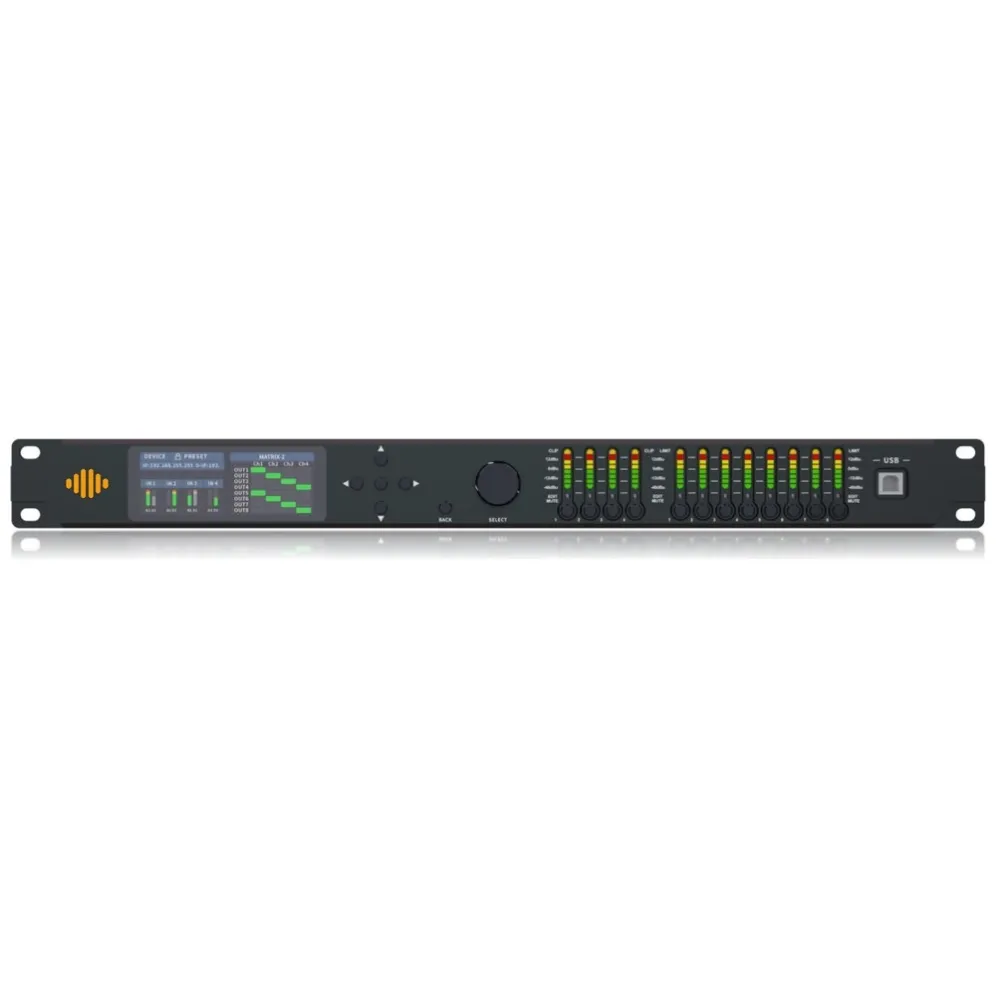
A DSP processor sits between your mixer and your amplifiers. It splits the sound — lows to the subwoofers, highs to the main speakers — and it protects the speakers with limiters. It also lets you tune the sound for the room. If your system has more than two speakers, a processor is worth having.
What to send us
If you want help choosing, send us:
- Your speaker models, and how many of each.
- The RMS power and impedance of each speaker, if you know them.
- How many channels you need, and whether you need subwoofers on the same amplifier.
- Where the system will play — a small room or a big stage.
Tell us the speakers, and we will match the amplifier — 2-channel or 4-channel, with the right power, and a processor if you need one.
— Belinda, Brave Audio